At Bella Vida TMS, we support people with Autism Spectrum Disorder (ASD) through personalized psychiatric care that focuses on challenges that may occur alongside ASD, such as anxiety, depression, irritability, attention concerns, mood changes, and sleep difficulties. Treatment options may include psychiatric evaluation, medication management, therapy or behavioral-health referrals, and TMS when clinically appropriate for co-occurring depression rather than ASD itself. We proudly serve patients in Gilbert, Glendale, Scottsdale, and Phoenixwith compassionate, individualized care designed to improve daily functioning, emotional wellness, and quality of life.
Autism Spectrum Disorder (ASD)
Autism Spectrum Disorder, or ASD, is a neurological and developmental condition that affects how a person interacts with others, communicates, learns, and behaves. Symptoms usually appear in early childhood, though autism can be diagnosed at any age. People with ASD often have differences in social communication and interaction, along with restricted or repetitive behaviors, interests, or routines. Autism exists on a spectrum, which means each person’s strengths, challenges, and support needs can look very different. With understanding, support, and the right care, many people with ASD can thrive.
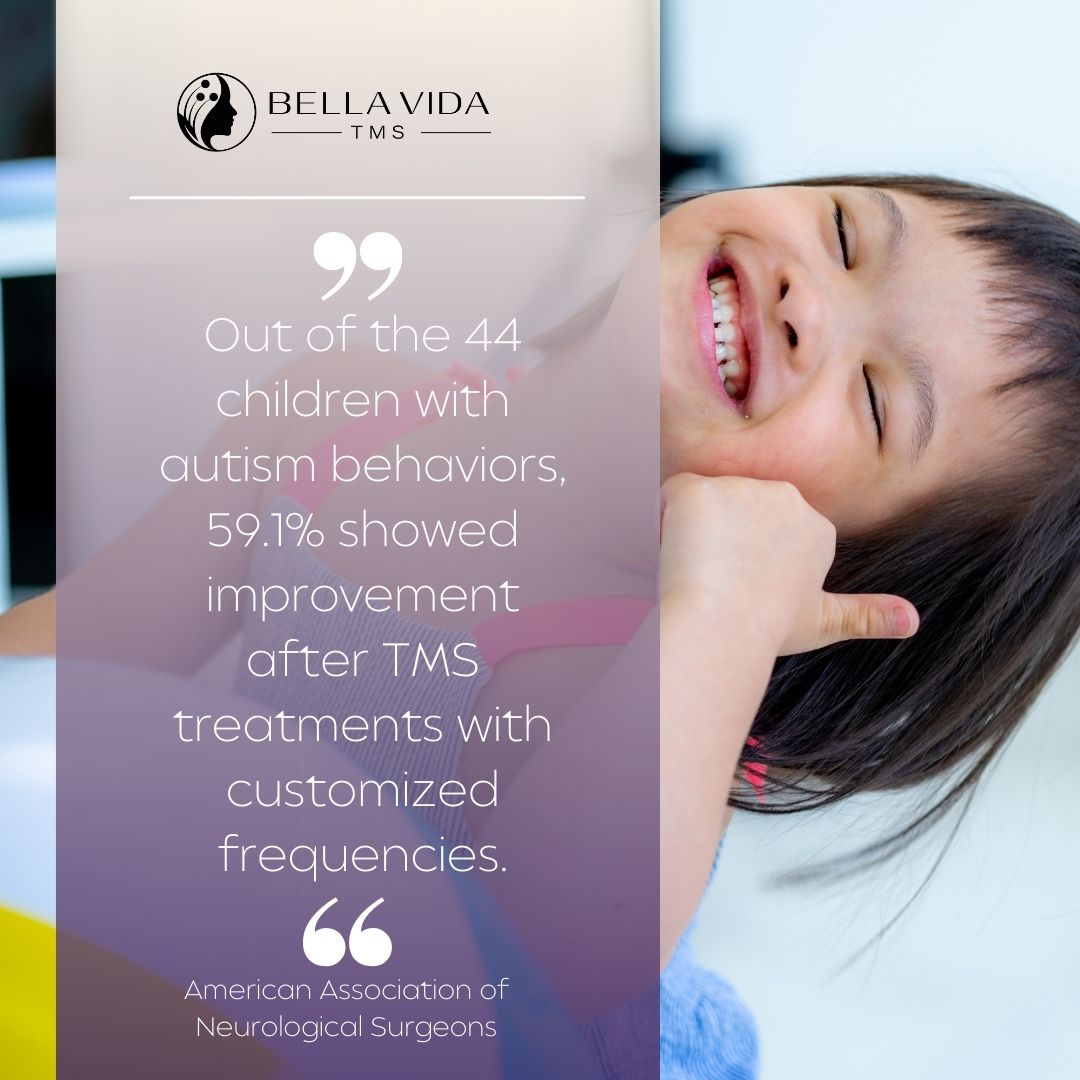
TMS is a promising, noninvasive treatment being studied in autism, with early research suggesting it may help some individuals with repetitive behaviors, attention, executive functioning, sleep, and emotional regulation. Treatment uses targeted magnetic pulses to stimulate brain networks involved in behavior and cognition. While larger studies are still needed, recent reviews describe TMS as a safe and encouraging option that may play a growing role in supporting some people with ASD.
Third Party Studies:
Enticott et al., 2014 — A double-blind, randomized trial of deep repetitive transcranial magnetic stimulation (rTMS) for autism spectrum disorder In 28 adults with ASD, active deep rTMS to the bilateral dorsomedial prefrontal cortex reduced social relating impairment and socially related anxiety compared with sham.
Yang et al., 2019 — High-Frequency Repetitive Transcranial Magnetic Stimulation Applied to the Parietal Cortex for Low-Functioning Children With Autism Spectrum Disorder This study reported a significant reduction in language- and social-related symptoms from pretreatment to 6-week follow-up, with caregivers also reporting possible improvements in imitation and cognition.
Kang et al., 2022 — Effects of 1Hz repetitive transcranial magnetic stimulation on autism with intellectual disability: A pilot study In 32 autistic children with intellectual disability who were randomly assigned to experimental and control groups, the authors found significant differences in brain-activity measures between groups and improvement in Autism Behavior Checklist scores after rTMS, concluding that rTMS could positively influence brain activity and behavior.
Medication management for autism focuses on treating co-occurring symptoms rather than the core features of ASD. A psychiatric provider may prescribe and monitor medication for irritability, anxiety, depression, attention problems, sleep issues, or aggression, while adjusting the plan based on benefit and side effects. The FDA notes that risperidone and aripiprazole are approved for irritability associated with autistic disorder in certain pediatric age ranges.
Third Party Studies:
McCracken et al., 2002 — Risperidone This multisite, randomized, double-blind, placebo-controlled trial found that risperidone was effective and well tolerated for children with autistic disorder who had tantrums, aggression, or self-injurious behavior.
Owen et al., 2009 — Aripiprazole This study found aripiprazole was efficacious in children and adolescents with irritability associated with autistic disorder and was generally safe and well tolerated.
Scahill et al., 2015 — Extended-Release Guanfacine In children with ASD and hyperactivity, guanfacine XR appeared safe and effective for reducing hyperactivity, impulsiveness, and distractibility. Search-result details report a 43.6% decline on the ABC-hyperactivity subscale with guanfacine versus 13.2% with placebo.
Long Term Results for ASD
TMS Research for ASD Symptoms
PeakLogic's research on treating Autism Spectrum Disorder (ASD) symptoms with TMS is groundbreaking, with two dedicated publications focused on helping children with autism.
Their work highlights the effectiveness of TMS in improving symptoms, and ongoing research continues to explore its potential.
Click the link below to access Dr. Murphy's research, and click the image to explore other related publications on TMS and autism.